
FIIDS Hosts 4th Annual U.S.-India Partnership Summit at U.S. Capitol, as the most Consequential Partnership
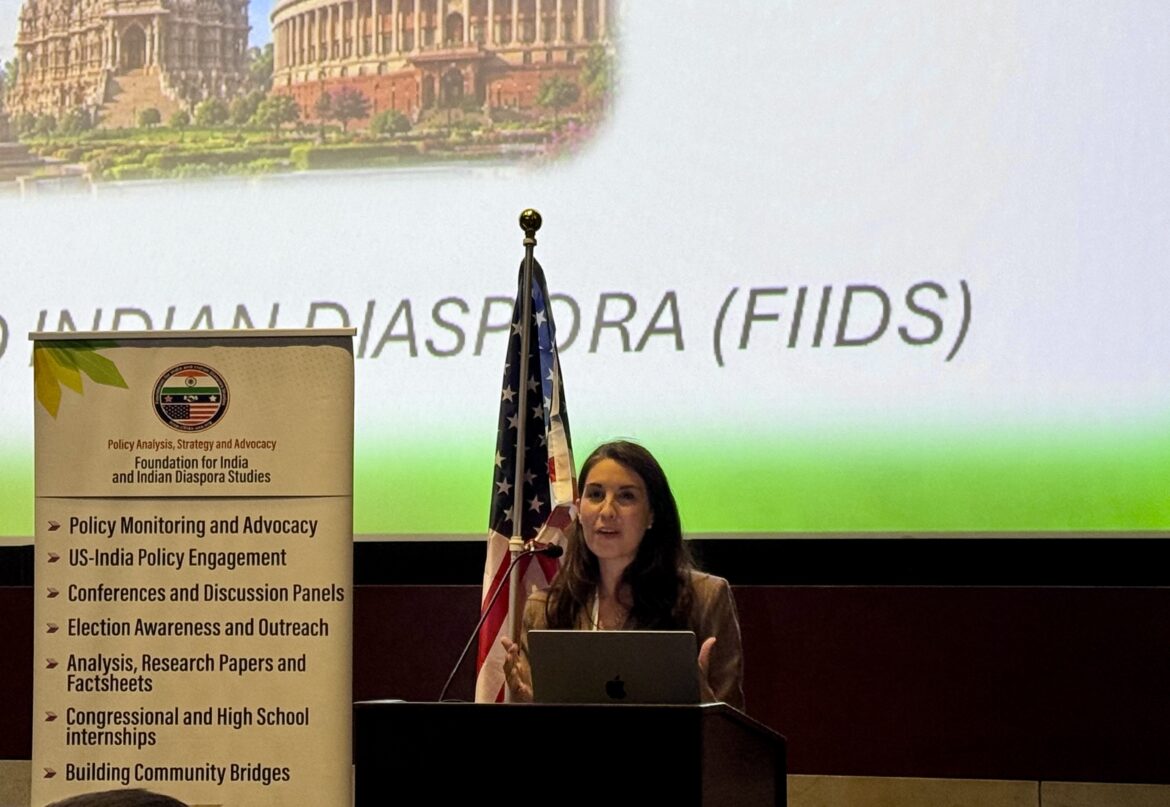
Deputy Assistant Secretary Bethany Morrison speaking at FIIDS US India Partnership Summit at Capitol Hill on 23rd June

Deputy Chief of Mission Ambassador Namgya Khampa speaking at Foundation for India and Indian Diaspora Studies US India Partnership Summit
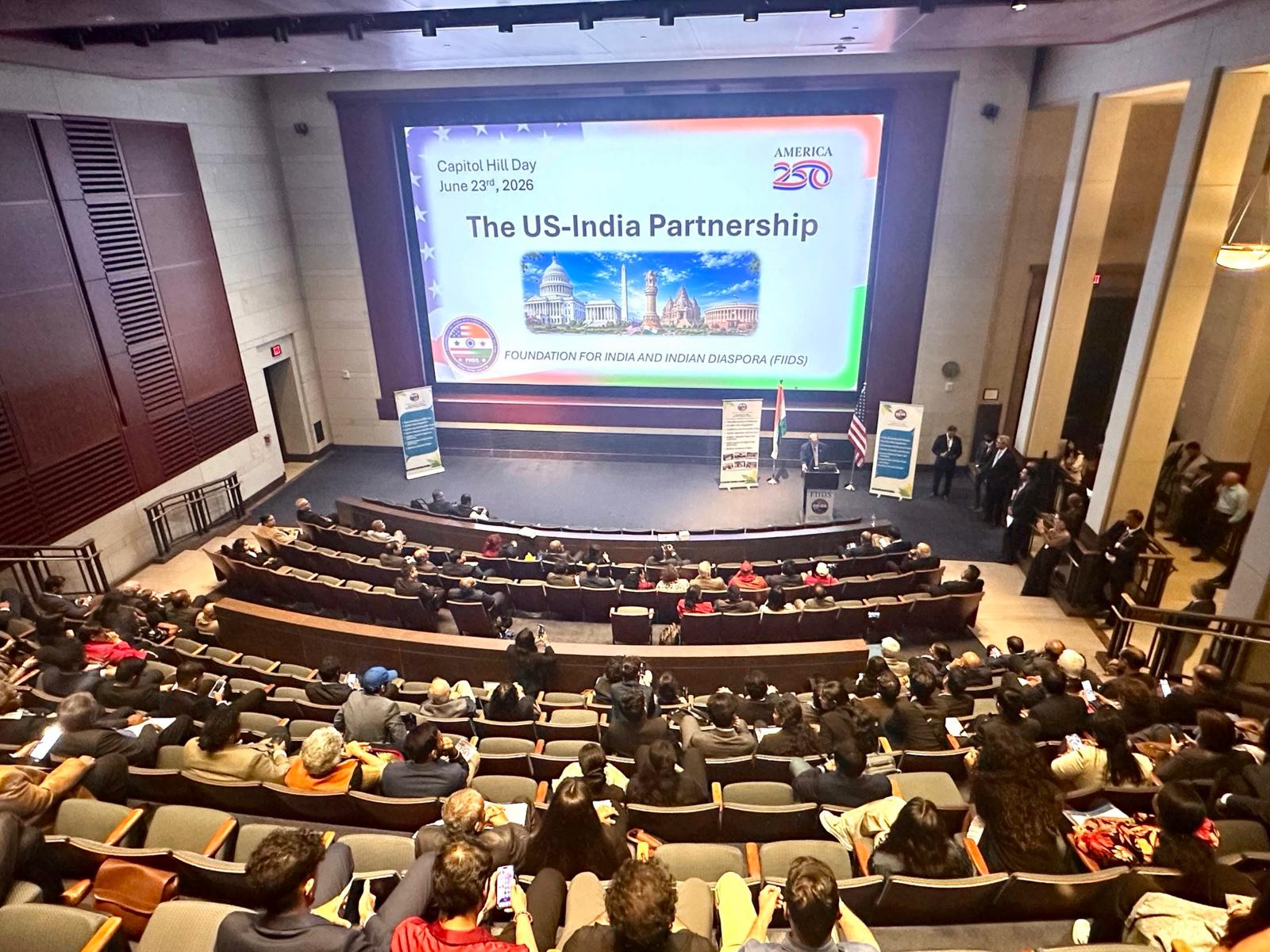
Foundation for India and Indian Diaspora Studies (FIIDS) US India Partnership Summit at Capitol Visitors Center in Washington DC
At FIIDS U.S. India Partnership Summit in DC, DAS Bethany Morrison, DCM Khampa refers as the most consequential partnership in technologies, defense & energy.
WASHINGTON, DC, UNITED STATES, June 26, 2026 /EINPresswire.com/ -- Washington, D.C., June 23, 2026 — The Foundation for India and Indian Diaspora Studies (FIIDS) hosted its 4th Annual U.S.-India Partnership Summit at the Capitol Visitor Center (CVC) in the U.S. Capitol, bringing together senior U.S. Administration officials, Indian diplomats, Members of Congress, policy experts and community leaders to reaffirm the growing strategic partnership between the United States and India.
The Summit concluded FIIDS' 4th Annual Capitol Hill Day, during which more than 150 delegates from 25 states met with over 100 Congressional offices, including nearly 20 Senate offices, advocating on Indo-Pacific security, trade, critical technologies, immigration reform, critical minerals, counterterrorism, and concerns over rising anti-Hindu and anti-India rhetoric.
Delivering the keynote address, Deputy Assistant Secretary of State for South and Central Asian Affairs Bethany Morrison underscored the growing importance of the Indian American community and the strategic partnership. "The Indian American community has contributed immensely to America's growth and success," Morrison said, describing the relationship as one of America's most important partnerships. She emphasized that the Trump Administration is focused on delivering tangible results and noted the two countries are "very, very close" to concluding a historic bilateral trade agreement while working toward $500 billion in bilateral trade by 2030.
Calling the partnership future-oriented, Morrison said, "The U.S.-India relationship is the future," highlighting expanding cooperation in artificial intelligence, semiconductors, critical minerals, energy, defense and education. She noted that bilateral goods trade reached $149 billion, Indian companies announced $20 billion in investments through SelectUSA, and more than 330,000 Indian students contribute over $14 billion annually to the U.S. economy.
Deputy Chief of Mission of India, Ambassador Namgya Khampa, described the bilateral relationship as "one of the most seminal and defining partnerships of the 21st century." "The reality is that there is a lot that brings us together and that makes us stronger together," Khampa said, emphasizing that despite occasional differences, both democracies remain committed to a long-term strategic vision. She praised FIIDS delegates as "very strong advocates" of the relationship and added, "People are the ultimate custodians of this partnership."
"This Summit represents the culmination of a remarkable day of civic engagement," said Khanderao Kand, President and Chief of Policy and Strategy of FIIDS. "The participation of more than 150 delegates from 25 states and meetings with over 100 Congressional offices demonstrate the growing civic engagement and influence of Indian Americans. The bipartisan support expressed throughout Capitol Hill Day and this Summit confirms that the U.S.-India relationship has become one of the defining strategic partnerships of the 21st century."
Senator Roger Marshall praised Indian Americans as one of America's most successful immigrant communities. "Every single time someone questions whether legal immigration works, you're the answer," Marshall said. "You didn't just come to America, you helped build it." Calling India an indispensable Indo-Pacific partner and one of the world's fastest-growing major economies, he urged expanded trade, greater market access and reforms to legal immigration.
Several Members of Congress reaffirmed bipartisan support for stronger U.S.-India ties.
Congressman Rob Wittman highlighted the growing strategic convergence between the two democracies, emphasizing defense cooperation, resilient supply chains and collaboration in emerging technologies as essential to maintaining stability in the Indo-Pacific.
Congressman Sanford Bishop reflected on the historic influence of Mahatma Gandhi's philosophy of nonviolence on America's Civil Rights Movement. "We must ensure that H visas for skilled workers and visas for students remain available in the United States," Bishop said. He also called for stronger cooperation on supply chains, counterterrorism and addressing anti-Hindu prejudice.
Congressman James Walkinshaw said the partnership has grown stronger because it is rooted in "shared interests and shared values." He emphasized cooperation on maintaining a free and open Indo-Pacific, strengthening supply chains, advancing artificial intelligence and modernizing America's immigration system, including addressing country caps.
Longtime India caucus leader Congressman Brad Sherman noted that "the trade relationship between the United States and India has grown exponentially" during his three decades in Congress. Sherman also highlighted his efforts to reduce visa backlogs and expand opportunities for Indian professionals.
Congressman Bill Huizenga, Chairman of the House Foreign Affairs Subcommittee on South and Central Asia, said both countries share a commitment to a "free, open and secure Indo-Pacific." Expressing optimism about ongoing trade negotiations, he remarked that discussions were "at the one-yard line."
Congressman Raja Krishnamoorthi spoke forcefully against rising anti-Indian and anti-Hindu prejudice. "There is the rise of anti-Hindu, anti-Indian, anti-Desi hate," he said. "I'm not going anywhere. Neither are you." Encouraging greater civic participation, he added, "If you don't have a seat at the table, you're on the menu."
Congressman Suhas Subramanyam called for addressing immigration backlogs affecting highly skilled Indian families. "America is missing out on so much talent from India," he said, while encouraging young Indian Americans to pursue public service and assuring attendees, "You have a champion in Congress in me."
Congressman Shri Thanedar urged unity against anti-immigrant sentiment. "I'm starting to see a lot more hate toward immigrants, and that has to stop," he said. "We have to fight that hate, and we have to unite."
Congressman Rob Bresnahan praised Indian Americans for strengthening communities through entrepreneurship, healthcare, education and civic leadership, while expressing support for expanding cooperation with India in trade, innovation and people-to-people ties.
The Summit also welcomed Congresswoman Judy Chu and Congressman Ro Khanna, who briefly joined the program to show their support for the Indian American community and reaffirm their commitment to strengthening U.S.-India relations.
Other distinguished speakers included Kapil Sharma of the Roundglass Foundation, who challenged the community to translate its success into a stronger collective voice, and Bob Peckar, board of Governors of American Jewish Committee who emphasized collaboration in combating religious discrimination.
The Summit concluded with a strong bipartisan consensus that the U.S.-India partnership is critical to advancing economic prosperity, technological innovation, democratic values, regional security and peace in the Indo-Pacific, while recognizing the increasingly important role of Indian Americans in shaping the future of relationship.
Khanderao Kand
Foundation for India and Indian Diaspora Studies
email us here
Visit us on social media:
Facebook
YouTube
X
Foundation for India and Indian Diaspora Studies Hosts Capitol Hill Day and US India Partnership Summit
Legal Disclaimer:
EIN Presswire provides this news content "as is" without warranty of any kind. We do not accept any responsibility or liability for the accuracy, content, images, videos, licenses, completeness, legality, or reliability of the information contained in this article. If you have any complaints or copyright issues related to this article, kindly contact the author above.
